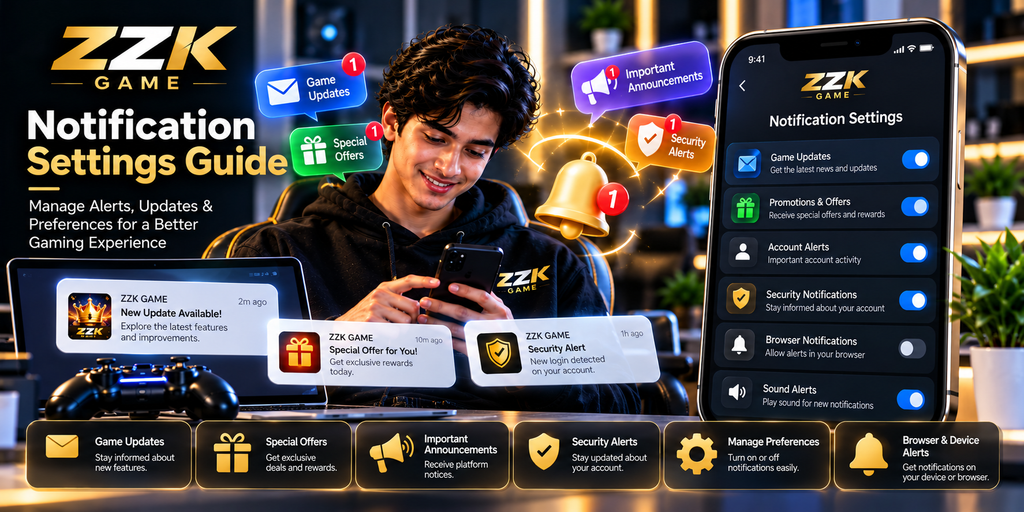
Notifications can help users stay informed about important account messages, updates, and other platform activity. At the same time, receiving too many unnecessary alerts can make the browsing experience distracting.
Understanding ZZK Game notification settings can help users review available alerts and manage their preferences according to their needs. This guide explains common notification types, browser permissions, device controls, and simple troubleshooting steps.
What Are Notification Settings?
Notification settings are controls that determine which alerts a user may receive and how those alerts are delivered.
Depending on the platform and device, notifications may appear through a website, browser, mobile device, or application.
Available notification options can vary, so users should always check the current settings provided by the platform.
Types of Notifications You May Encounter
Online platforms can use different types of notifications for different purposes.
Common examples include:
- Account-related alerts
- Important platform updates
- Security notifications
- Service announcements
- Browser notifications
- General communication messages
Not every notification type will necessarily be available on every device or account.
How to Review Notification Preferences
Before changing notification settings, first review the options available in your account or browser.
A typical process may include:
- Open the relevant account or platform settings.
- Find the notification or communication section.
- Review the available alert categories.
- Check which options are currently enabled.
- Change preferences where supported.
- Save the settings if the platform requires confirmation.
The exact navigation can differ depending on the current platform interface.
Browser Notification Permissions
Website notifications may also depend on your browser’s permission settings.
If browser notifications are supported, your browser may ask whether a website can send notifications.
You should review the request before selecting an option. Only allow notifications from websites you recognize and trust.
If notifications are not appearing, check your browser’s site-permission settings and make sure notifications have not been blocked.
Managing Notifications on Mobile Devices
Smartphones have their own notification controls.
Even when a website or application has notifications enabled, the operating system may restrict them.
Check your device’s notification settings if alerts are not appearing.
Useful areas to review include:
- App notification permissions
- Browser notification permissions
- Do Not Disturb settings
- Battery-saving restrictions
- Background activity permissions
The names of these options can differ between Android and iOS devices.
Managing Notifications on Desktop
Desktop users may receive browser-based alerts depending on their browser and operating-system settings.
If notifications are distracting, review the browser’s notification permissions and operating-system notification controls.
You can also check whether the browser is allowed to send notifications while it is running in the background.
Why Are Notifications Not Appearing?
Several factors can prevent notifications from appearing.
Possible causes include:
- Notifications are disabled.
- Browser permissions are blocked.
- Device notifications are turned off.
- Do Not Disturb mode is active.
- Battery-saving settings restrict background activity.
- Browser permissions were previously changed.
- The platform does not currently support that notification type.
Start with the simplest checks before changing multiple settings.
Why Am I Receiving Too Many Notifications?
Receiving frequent alerts can happen when several notification categories are enabled simultaneously.
Review the available notification preferences and identify which alerts are actually useful to you.
If the platform provides separate controls for different categories, adjust only the categories you do not need rather than turning off every notification.
Keep important account or security-related alerts enabled when appropriate.
How to Handle Unexpected Notifications
If you receive an unexpected notification, do not immediately click links contained within it.
Instead:
- Read the notification carefully.
- Check whether you recognize the source.
- Avoid entering passwords through suspicious links.
- Open the platform directly through a trusted route.
- Review your account if the notification concerns account activity.
This approach can help reduce the risk of interacting with misleading or suspicious messages.
Notification Settings and Privacy
Notifications can sometimes display information on a locked screen or shared device.
If privacy is important, review your device’s lock-screen notification settings.
You may be able to control whether notification previews display full message content or only basic alert information.
This is particularly useful when other people may have access to your phone or computer.
Simple Notification Troubleshooting
If notifications are not working as expected, follow this checklist:
Step 1: Check whether notifications are enabled.
Step 2: Review browser or application permissions.
Step 3: Check your device’s notification settings.
Step 4: Disable Do Not Disturb if appropriate.
Step 5: Check battery-saving restrictions.
Step 6: Update your browser or application if an update is available.
Step 7: Restart the browser or device.
Step 8: Check the platform’s official help information if the issue continues.
Notification Settings Best Practices
A few simple habits can make notification management easier:
- Review notification preferences regularly.
- Keep important security alerts enabled.
- Avoid allowing notifications from unknown websites.
- Check browser permissions when alerts stop working.
- Review lock-screen notification privacy.
- Disable unnecessary categories instead of everything.
- Keep your browser and device updated.
- Be cautious with unexpected notification links.
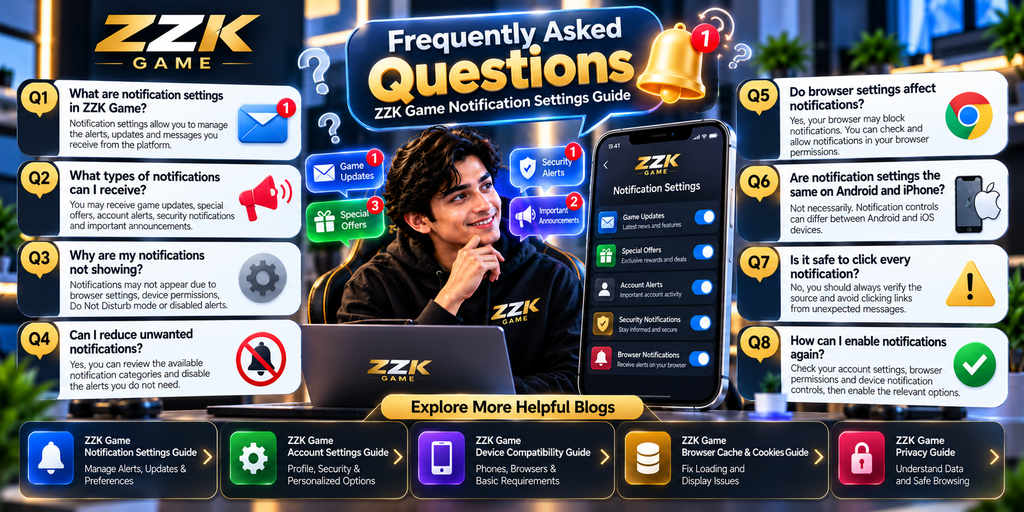
Frequently Asked Questions
What are ZZK Game notification settings?
They are the available controls for managing alerts, updates, and other notification preferences associated with the platform.
Why are my notifications not showing?
Check your account settings, browser permissions, device notification controls, and Do Not Disturb settings.
Can browser settings block notifications?
Yes. A browser can block notifications for individual websites or globally depending on its settings.
Can I reduce unnecessary notifications?
If notification categories are available, review them and turn off the types of alerts you do not need.
Are notification settings the same on Android and iPhone?
Not necessarily. Device-level notification controls vary between operating systems and individual device versions.
Should I click every notification I receive?
No. If a notification looks unexpected or suspicious, verify its source before opening any included link.
Conclusion
Understanding ZZK Game notification settings can make it easier to manage alerts without allowing unnecessary messages to become distracting. Reviewing platform preferences, browser permissions, and device-level controls can help users understand why notifications appear—or why they may not appear.
For better notification management, keep useful alerts enabled, review unnecessary categories, and treat unexpected messages carefully.